



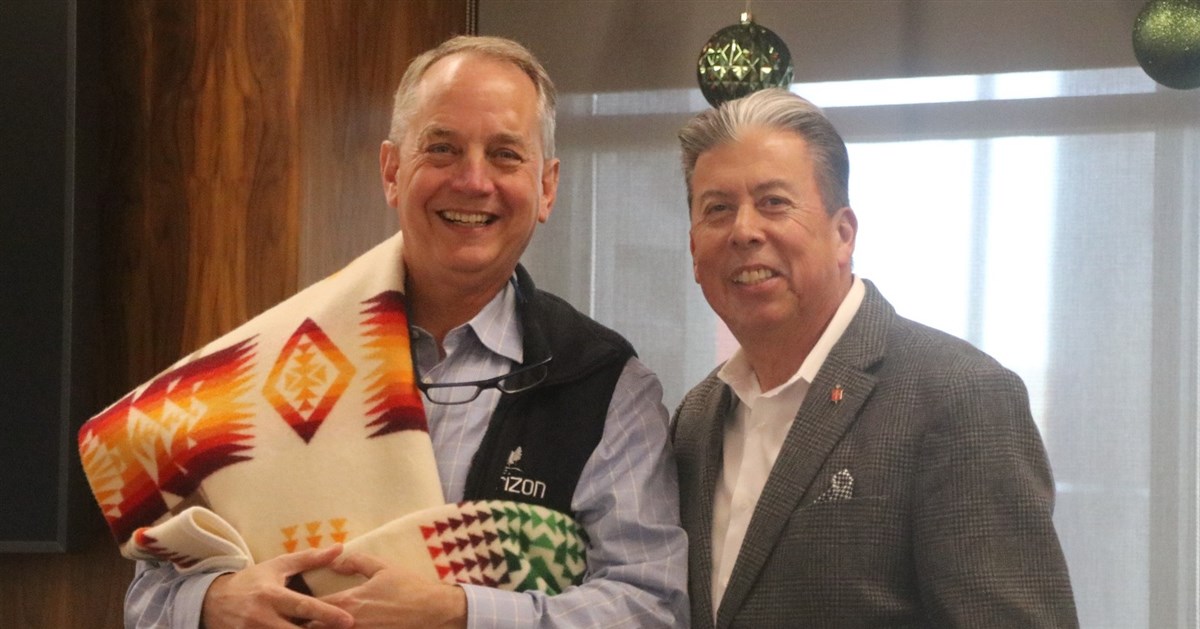
Bob Kahle has been involved in camping ministry in one form or another for the past 50 years.
And even though he’s retiring as director of camping services for Great Plains Camps at the end of the year, it doesn’t mean that involvement will end.
“God’s given me peace about it,” Kahle said. “I just turned 65, and my wife and I have plans to do some other things. I still love what I’m doing, I just don’t want to do it every day.”
Kahle said he’s considering offering himself as a consultant to camps, “if the situation arises, and it’s the right thing.”
“I know I want to help with the kingdom building,” he said. “I’m not going to sit on the sidelines. I’ll still be cheering people on and coaching people up.”
If Great Plains Camps want his help in 2026 and beyond, he said he’ll gladly answer the call.
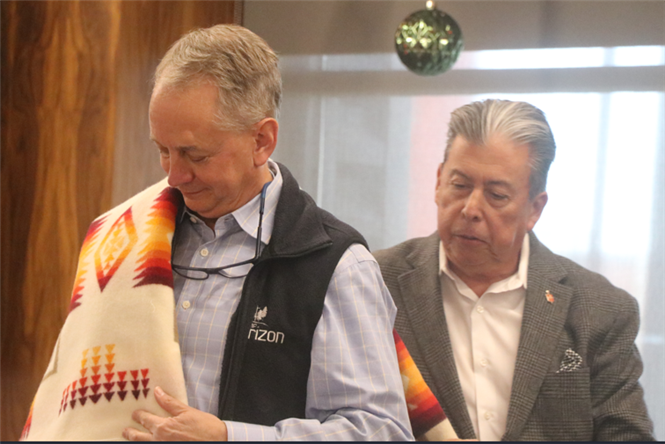
“I will do whatever the board wants me to do,” he said. “Whatever they need. I have too much invested in the camps, I love this place, and I don’t want anything to falter.”
With 30 years of camp management experience, Kahle was hired in 2022 as the first director of camping services for Great Plains Camps, a new governing structure that shifted from its previous consultancy system by a conference employee who had no authority to speak for the board to a director who answers only to the board.
Rev. Bill Ritter, chair of GP Camps, said Kahle was the perfect fit for the new endeavor.
“When the district superintendent appoints a pastor to a new church, you always pray there’ll be a good match,” said Ritter, himself a cabinet member from 2014 to 2019. “We couldn’t have asked for a better match with the Great Plains Conference than Bob Kahle. He came in with expertise, knowledge, excitement, energy and innovation.
“We didn’t know how this new Great Plains Camping 2.0 was going to go and how it was going to function,” he added. “We had this idea on paper, but would it work out when we got down to the real thing. With Bob, he took what we had on paper and brought it alive.”
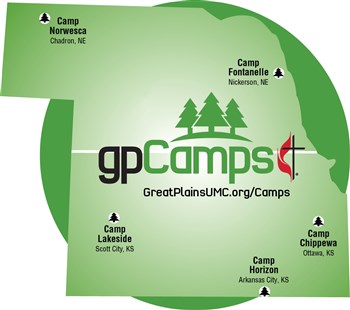
Kahle said he was pleased with the structure and the way it has improved the professional development of the directors of the five camps.
“They’ve really grown their confidence, their knowledge of the business side of camps — whether that be their strategic planning or working on unit objectives so they can know exactly how they’ll express their camps, to fundraising to delivering messages,” Kahle said. “They’re all growing, and I couldn’t be more pleased to be a part of that.”
The camp directors have also developed more camaraderie, Kahle said. The day before the quarterly meetings of the GP Camps board, rotating among various sites, directors gather for a tour and constructive suggestions — including an incomplete restroom facility at Camp Norwesca that was solved for just a few hundred dollars.
“We have 24 hours to spend some quality time, strategically thinking and talking about the facility,” Kahle said. “One of the reasons I think it worked well is because I hear from the directors that they appreciate working together more. They are now pulled together.”
Ryan Siver, director of Camp Fontanelle, said he’s appreciated Kahle’s leadership.
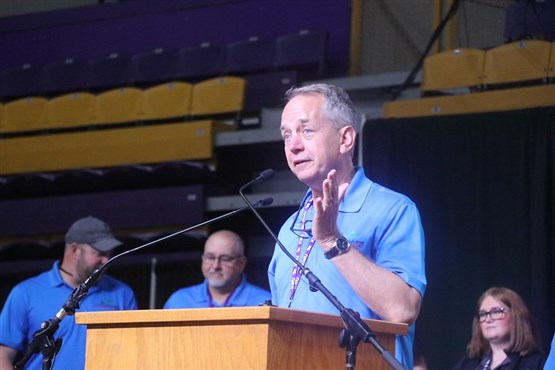
“The biggest thing is that Bob came in and helped with stability and really helped stabilize some systems and have oversight,” he said. “It was much needed at the time and moving forward.”
Under the new structure, Kahle said, four of the five camps have been able to share summer staff with counselors going from one camp to another when needed.
“Some of these camps are six hours apart, and they’re still saying, ‘We’ll be there for you,’” he said.
Ritter said Kahle was just what Great Plains camps needed in its new chapter.
“Our camps are in better position now than they were prior to him being with us,” he said. “His coaching with all of our camp directors has been phenomenal. His spirit-led leadership for our camping has been a great asset.
“Thousands of kids have been touched in the name of Jesus Christ since Bob has been in this position,” he said. “We’ll never know till years and years from now what a difference what a difference his presence in Kansas and Nebraska has meant to those young lives and to all of society.”
Even though he wasn’t a member of the conference staff, Kahle has an office in Topeka alongside staff members.
“I think that we’re strong, collectively we’re strong. The conference is our best friend, and our relationship with the conference is better than most UMC camps,” he said. “I’m not sure why that is, but I’ve enjoyed building that relationship and making it very evident that it is a partnership.”
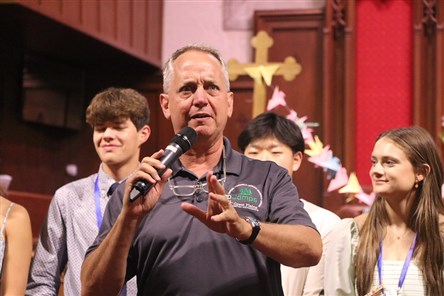
Kahle said he wished more clergy and churches would use the camps for everything from pastoral retreats to group meetings. At Camp Lakeside, for example, there are cabins for adults that don’t have them in the single-bunk bed setting.
“That’s a nice way to give back to the conference and a way to say, ‘We know what you’re doing is stressful,’” he said.
Kahle said he also wished that youth mission trips would consider staying at the conference camps as a home base. Camp Norwesca, he said, is not far from several Native American reservations.
“They don’t have to leave our conference to have a meaningful experience,” Kahle said.
Camp populations throughout the Great Plains have not returned to pre-COVID numbers, he said, and he’s not sure that they will.
“The whole concept of the pandemic has made people go, ‘I’m not sure I want my child that far away,’ because we’re so used to them being under our feet,” he said.
However, day camp numbers — where children are dropped off in the morning and picked up at night — have increased at Camps Lakeside, Chippewa and Norwesca, and Lakeside is adding day camp in 2026.
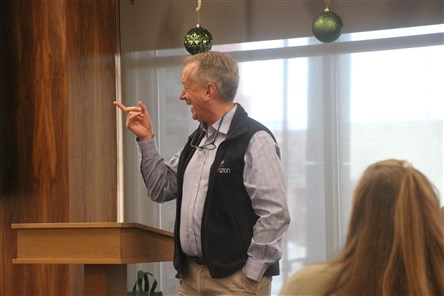
As Kahle departs, capital campaigns have started for a “Safety First” addition at Camp Horizon, which will expand the entry and gate to improve traffic flow, as well as add a sunshade for the jumping pillow, one of Horizon’s most popular activities.
A new low ropes course has been added to Camp Norwesca, with Camps Chippewa and Fontanelle considering following suit.
A native of the Chicago suburbs, Kahle has led camps in California, New York, Michigan, Texas and South Carolina.
He and his wife, Tina, a physical therapist, are staying in Topeka after his retirement.
“We like where we’re at. We love the community we’re building,” he said.
The couple has two adult sons, one whom lives with them and another who lives in Lawrence.
A search committee for a successor began work Dec. 9, the day of Kahle’s retirement celebration, Ritter said.
Ritter said he hoped to begin advertising for the position before the end of the year, with interviews taking place in January and February.
“We don’t want to rush it, but we’d like to get that person in place by March,” Ritter said.
Contact David Burke, content specialist, at [email protected].